To contact us Click
HERE

GOOOOOOOOOD MORNING, SEEKERVILLE!!!! Oh mylanta, it's been raining cats and dogs, buckets and every other thing you can think of in upstate New York! My puddles have puddles!
And the puppies.... (who will start going to their new homes this weekend!!!!) ... Oh, puppies love to play in puddles. Splashing. Chasing kitties. And toddlers. It has been officially determined that puppies love water!
For the record: Let me just say that at no point in this blog post do I EVER equate Mary Connealy to a really ugly animal. Because that's just SO STINKIN' MEAN.
And I'm the nice Seeker! ;)
Regina Mills/Queen Regina/Wicked Stepmother/Trophy Wife/Dutiful Daughter/Wounded SoulNow there's a balanced character archetype.And here she is in her Evil Fairytale Glory:

And here's a You Tube link that takes you to a short montage of Regina...
Click here and then come back!!!!
If you have no idea what I'm talking about, first: WHAT PLANET ARE YOU LIVING ON?????
 |
| The planet Mars, inhabited by tiny bits and bytes and mites.... |
That's like pretending Gibbs doesn't exist. Or that Jimmy Stewart was a two-bit actor. Oy.
For the record again: Queen Regina/Mayor Mills is played brilliantly by Lana Parrilla, one of the stars of ABC's "Once Upon a Time" a crazy fun fairy-tale spin show that puts most fairy tail movies to shame.

Why?
First: Wonderfully taut and tight writing by the writers that brought us "LOST"... Now, I didn't like "LOST" because it had no point, no center, no gravity and it felt hodge podge... And good fantasy should have threads that make some kind of sense, that intrinsically weave a story through circumstance, emotion, relativity and empathy. If you are creating Netherworlds, trying to become too complex can be your downfall. Readers want to understand, to get lost in the 'other place', but that's hard to do if your names.... (Ollibuf, Ornswaggleov, Diaphapheadraanna, etc.) do not bear pronouncing much less remembering. Some fantasy writers/authors get lost in the setting and their ability to use far-out names and made-up governmental regiments. They forget to write a great book. That's a newbie mistake, because if you skip back to great fantasy works, they are amazingly simple... Good vs. Evil. And eventually, Good wins.
So it's okay to NOT CREATE an entire new language, name system, solar system, on top of writing a story. Use the craft carefully, and that's what the writers of "Once Upon a Time" have done so well, while totally twisting and adding to the fairy tales we thought we knew.
"Once Upon a Time" borrowed concepts from Brothers Grimm, Sisters Grimm, children's books and the writers' own imaginations and layered the show with a great cast of modern day characters trapped in a fictional town in Maine. "Storybrooke" is a town without magic, a town where time stands still, a town whose captive storybook characters in kept in place by some sort of invisible force field.... But today we're writers, focused on character development and the
Ultimate Queen Award must go to Queen Regina....

The writers make it easy to hate Regina. She's a user. An abuser. A taker. She is completely manic and undeniably clever, and the writers have used P-A-T-I-E-N-C-E as one of her fortes. Why is this important? Because it's subtle. You don't have it in-your-face.... Like her savage ways of removing living, beating hearts.... Or her sheer delight when besting a foe... Her utter disregard for children's hopes and dreams....
No. Regina's patience to horde her mental, emotional and physical weapons is a huge part of her success but it's not lauded. Or spoken of. Or alluded to. It's simply there, and that's what makes it brilliant. Quietly layering your characters with qualities that speak to a reader's heart, mind or emotions is the gift of great story-telling. If you MUST explain something, you should probably do a re-write...
We all know that the wicked stepmother/evil queen hated Snow White. While young and foolish, we thought 'twas merely vanity..... The mirror bespoke Snow's beauty and that became her undoing.
Obviously we were mistaken because now we know that the young Regina was the victim of child abuse herself.... At the hands of a magic-wielding, evil, ladder-climbing, stop-at-nothing-to-make-my-daughter-queen mother....
 |
| Who would have thought the sweet Barbara Hershey would be an EVIL QUEEN MOTHER???? |
Drama begets drama......After months of viewing, we build some sympathy for "Regina, the child" in this late-season episode. This is her Darth Vader-like background, a glimpse of why we become who we are... and the choices and roads not taken.
Those old paths are the bricks of the future, right? On those cornerstones we build characters, setting, plot, but not overloading the story with backstory????
HUGE.
Occasionally we would glimpse Regina's pain in her gaze, her eyes, always averted from others, lest they see... but the viewer (or reader) could see it. But they were teensy-tinsy increments, subtle and short.... barely notable. But there.
Regina will stop at nothing. Not back then, in fairy-tale land. Not now in Storybrooke... always plotting, scheming, staying one step ahead. But every villain has a nemesis.
Regina has several.
Rumplestiltskin/Mr. Gold, played by Richard Carlyle:
 |
As current-day pawn shop owner and lawyer... (grinning here) Mr. Gold
|
 |
And as Rumplestiltskin in fairy-tale land of lore....
AND:
|
 |
Face-off between Mayor Regina Mills and newcomer Emma Stone... Snow White's and Prince Charming's daughter, the "Luke Skywalker" type savior, the key to breaking the curse...
AND:
Her adopted son, Henry...

Henry is determined to prove that Regina is an evil fairy tale queen and his innocent belief in fixing things, breaking the curse, is what draws the adult drama together. Using a child to draw factions together is a strong and often-used maneuver in story-telling. In romance, it's the "baby" draw... In fantasy it's the "savior" or "hope for the future" pull. In suspense, it's the "fix it" maneuver. We need a safe haven for our children, one way or another.
Key elements of great story-telling don't change much. You can call it by any acronym you wish (which we know I won't do because you'd have to READ that stuff, and well... Really?????)
Layering characters through setting/emotion/action/reaction is the basis for a strong story. The writers for Once Upon a Time have done a wonderful job with Regina... Mr. Gold... Henry... Emma... And of course Snow White, the tough but innocent princess-type.
I'd love to chat about story telling and fairy tales and romance with you today! And if you're a writer and would like to have your name in the cat dish for a critique (and you know, I ALWAYS clean the cat dish before I throw your names in, LOL!) just mention it in your comment. If you just want to be in for the book, leave a comment and you're in, automatically!
And might I just add (yes, shameless plug because selling books is INTRINSIC TO MY CONTINUED GOOD HEALTH!!!!) that "A Family to Cherish" is simply a deeeeelightful story!

|
Come on in! Coffee's on and the conversation's startin'!
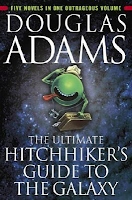 Ursa Minor Beta
 Miranda
 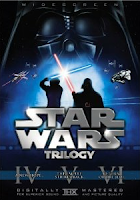 Tatooine
 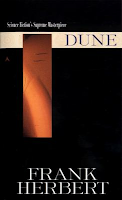 Arrakis
 This book tells the story of how a virtually unknown prairie lawyer iselected to the office of President of the United States over three powerful andfamous politicians, William H. Seward, Salmon P. Chase, and Edward Bates.
 Colquitt and her husband Walter live in a upper middle class subdivision outside of Atlanta, with neighbors who are all close friends, and entertain at each other’s house.
  Alexandra ("Barney") Barnaby’s friend, Rosa, is missing from a weekend getaway trip to the Florida Keys. At Rosa's job, Barney finds a voodoo doll. In walks, Sam Hooker, Barney’s romantic interest and he decides to throw the doll away…
 Robert Perry comes from a wealthy slave owning family and Willie Burke, is from a poor family of Irish immigrants. Both men join the Confederate Army and fall in love with the same woman, Abigail Dowling, who is an abolitionist

 serious jeopardy. Think Katniss and Peeta in The Hunger Games, or Tom Hanks’s character in the movie Cast Away. Adventure stories usually rely heavily on survival needs, as do romantic suspense novels like Debby Giusti’s MIA: Missing in Atlanta.
 Safety and security. The second level is one step above (pardon the pun) merely surviving. This is the need to believe that what makes us feel safe and secure won’t be taken away from us. It can include everything from financial security to health and well-being. In Tina Radcliffe’s novel The Rancher’s Reunion, the hero is living with Huntington’s disease, but not really living because he’s letting health worries separate him from the woman he loves. In A House Full of
  Hope, by Missy Tippens, the heroine is a single mother of four who worries that the hero’s arrival in town will result in her family’s eviction from their home.
 Janet Dean’s hero in Wanted: A Family exhibits his need to belong by attempting to find the mother who abandoned him.
 insecure in her family’s love, and she lets jealousy of her sister Faith drive her to seek validation in unhealthy romantic relationships.
 Connealy’s Sophie’s Daughters series. In each novel the heroine must grow beyond her own weaknesses until she finds fulfillment--first through her reliance upon God, then believing in herself, and finally as a strong, confident partner in a satisfying romantic relationship.